The Free Men Collective on the Balkan routes, 10 years later: Trieste - Sarajevo, the first part of the journey
Trieste, Republic Square. Dozens of people in front of the train station, of various nationalities, welcome the group of volunteers, and some volunteers, of the Linea d'ombra Association. The association brings support to people on the move every day that arrive from the Balkan routes: food, dressings, blankets and clothing.
The scroll contains the first drawings, words of peace and freedom, many languages and cultures united in a single story to write together in the long month of long journey the Balkans that awaits us.
Many people leave their mark on the long piece of paper that gives ten years the Menti Libere Collective has been taking along the migratory routes.
Over the last fifteen years the Balkan routes have drastically changed, come, more generally, those pointing to Fortress Europa.
Send it 2010, with the entry into force of the regime visa free, the number of asylum seekers continued to rise and peak beyond 700.000 people who passed through 2015, in the middle of that year the situation changed with a rapid domino effect.
When the Hungarian Orbàn announces the closure of his borders with Serbia and Croatia in June, almost all the pressure of the flow is concentrated on Croatia and Slovenia, transforming the upper part of the Western Balkans into a bottleneck and inaugurating the "race to fortification".
In November the various states erect barbed wire walls along their southern borders and Austria, Slovenia and Croatia decide to let only Syrians through, Iraqi and Afghan.
I remaining, mainly Sudanese, somali or pakistani, vengono bubbleof ingiustamente come “migranti economici” e bloccati within this perverse game of the goose.
From that moment, with the financial assistance of the European Community and the cooperation of Frontex (European Land and Coast Guard Agency), the borders of this region have become increasingly hermetic and dangerous.
Dalla famosa “crisi migratoria” del 2015-‘16 l’Unione Europea si è sempre più adoperata a gestire con fermezza l’emergenza delegando a Paesi third parties the coercive and forced containment of people on the move.
The flows of people passing through the Balkans to reach Europe have dropped due to walls and forced rejections, the so-called pushback, prohibited by the Geneva Convention of 1951.
Today we returned to those routes, walking them a backwards, exactly ten years later.
Un van, nine backpacks, a large food supply – by good Italians – and the shared desire to travel, knowing and exposing the humanity that makes us universally equal.
And part.
Bihac, Bosnia and Herzegovina. The weather is muffled, denso, like the clouds of tobacco puffs of the many patrons of the Balkan bars.
The welcome of the operators of the center for minors in Bihać brings us back to that feeling of welcome, sharing, intimacy, which makes the house a nomadic place, a backpack that you carry with you, full of memories, identity, dreams. A backpack to open, empty, leaving small crumbs along the way, exchanges and gifts to share, to then return to fill it and resume the journey.
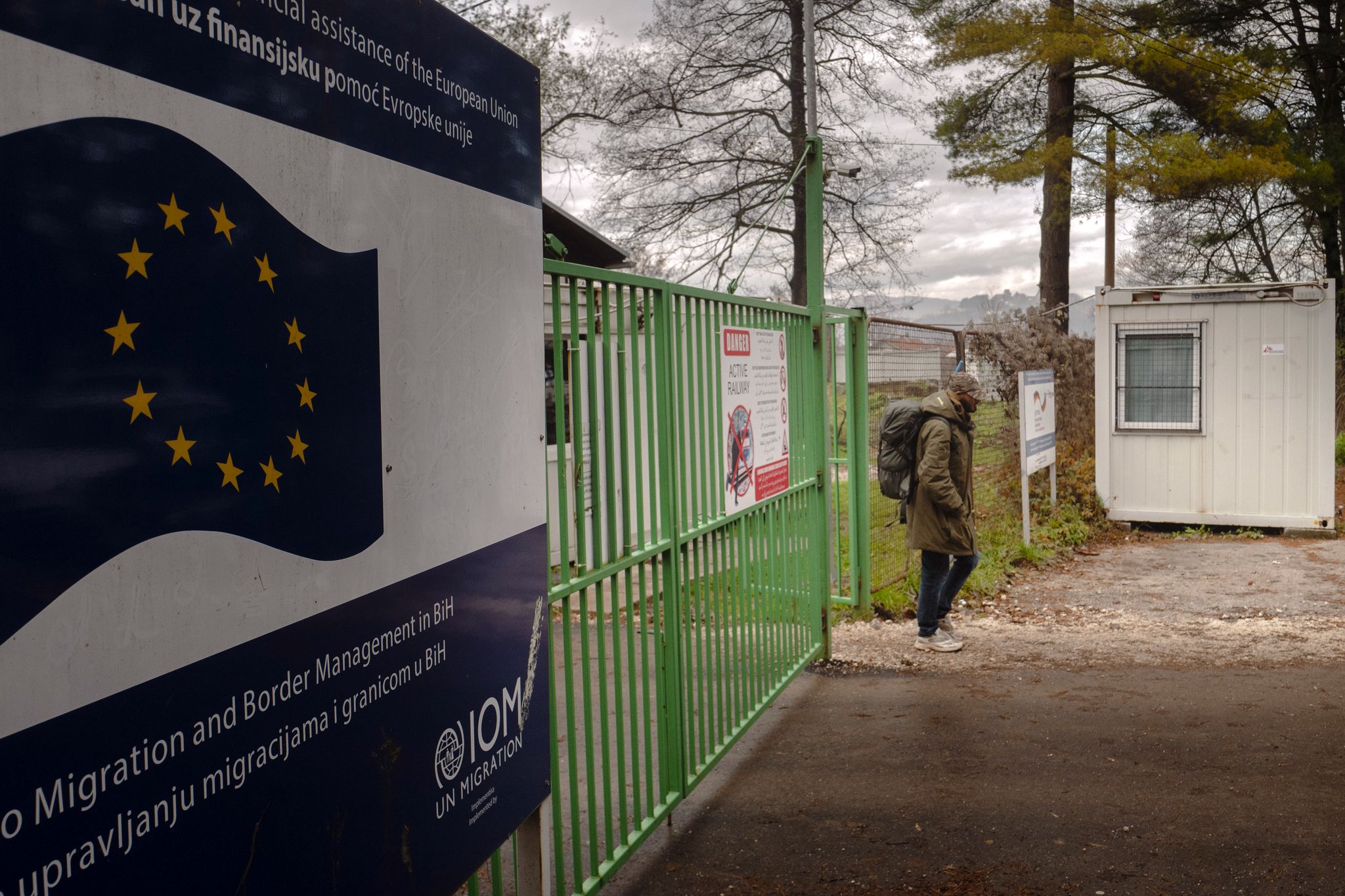
Bihac, insieme a Velika Kladusa, it has been a crucial point for migratory flows in recent years, place of passage from which to begin this last part of Game, the dangerous and very difficult Croatian section of the route dotted with control devices, police and criminal gangs.
The girls and boys of the IPSIA center for minors, the Italian institute that manages the center for minors and has been operating in Bosnia since 1997, they welcome us with open arms. Dario, Natasha, Viktoria, Martina: four of seven Roma brothers. They speak Bosnian, English, French.
“They are citizens of the world, glielo si legge negli occhi che portano la tenerezza della loro età e la scaltrezza di chi ha vissuto un bagaglio di esperienze troppo adulte per la loro giovane età” commenta a caldo Annalia, the only woman of this group on the trip.
Together with them Nafali, a boy from Gambia, who dreams of becoming an engineer and bringing words of peace to the world. He speaks five languages and is now studying Bosnian and Italian. He would like to join his aunt, in Spain. And despite this, he started school in Bosnia and is learning Serbo-Croatian. His father, Gambian activist killed because he opposed the regime, he gave him a passion for reading. There are also an Egyptian boy and a Syrian boy. A fleet of brave souls, intrepid, disarming. Pending.
We didn't come here just to meet them and learn, by those who work in the field with professionalism and above all with humanity, how the Balkan route has changed and is changing today.
Let's take out our weapons, the cans, which in the hands of these people are starting to transform the white wall of the centre: a winged dove, symbol of peace and freedom.
A message that can accompany, with its colors and shapes, the days that children spend in this place.
In the meantime, the scroll touches various points of the Bosnian town and comes across in Jamal, thirty year old Moroccan boy. Nice guy, elegant, with a blue wool hat. He loves the cold and would like to go to Norway.
He tells us about his childhood in Morocco in the orphanage where he grew up. He draws his desert for us, the famous city of Ouarzazate and shows us his temporary home: a tent in an abandoned house. He lives alone, so as not to attract attention, and why loves solitude.
But also because Lipa's official camp, managed by the Ministry, It is nestled in the mountains and is more than 100 meters away from the town 25 km.
Jamal tried four times to cross the border to reach Slovenia, in vain. Tre volte da solo, the last one, with three other boys. After days of walking crossing rivers and mountains, il The biggest obstacle was the Croatian police, who sent them back to Bosnia: pushback.
When the police aren't the ones carrying out these illegal pushbacks, the criminal gangs who patrol the borders take care of them, robbing and sometimes kidnapping people in transit.
Guy Nzolani tells us about it, who together with his two cousins was stopped by Afghan mafiosi on the Bosnian-Croatian border. A journey, that of game, that turned out for them, as for thousands of other people, a nightmare.
Fortunately the criminals did not find any cash, but only the cell phones of the three. From Congo they arrived directly in Türkiye, and then get stuck in the Balkan bottleneck. They returned to an official camp in Sarajevo's industrial area, to regain strength and perhaps even money before trying it again for the umpteenth time game cwith a secret ingredient: the typical West African attitude to smile, which for now resists.
Ph Credits Michele Cattani
Migrart: Art as an encounter It is a project organized by the Association Mind Free. After ten years of Balkan routes, decided to undertake the same route as 2015 to document the situation and changes. The trip will end in Istanbul, after carrying out artistic projects in Bulgaria and in Greece.